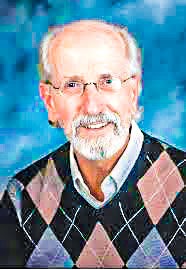


I recently found myself in conversation with a young activist-- brilliant, earnest, morally serious-- who made a claim that was both understandable and unsettling. Young people, he said, simply don't want to hear from old people like me, especially old white men. We've had our turn. We made a mess. And whatever we call "wisdom," grounded in our long lives and accumulated experience, feels to them less like insight and more like obstruction.
I understood immediately why he would feel that way. My generation was born during the Great Depression and its aftermath; the boomers who followed presided over imperial wars, environmental devastation, runaway capitalism, and the hollowing out of democratic institutions. Zoomers have every reason to be suspicious of elders who lecture them about patience, realism, or incremental change. The house is on fire. Who wants to hear a sermon about proper etiquette?
And yet, something about the conversation troubled me-- not because I felt personally dismissed, but because of the assumptions beneath the dismissal. In particular, the identification of "young people" with young Americans struck me as dangerously parochial. Outside the United States, especially in the Global South, students and young intellectuals are often strikingly comprehensive in their critical thinking. They do not imagine that wisdom expires with age, nor that critique began with TikTok.
Across Latin America, Africa, and parts of Europe, young activists routinely engage figures who are not only old, but long dead: Marx, Engels, Gramsci; Frantz Fanon, Simone de Beauvoir, W.E.B. Du Bois, Mary Daly, and Malcolm X. They read these thinkers not out of antiquarian curiosity, but because the structures those thinkers analyzed-- capital, empire, race, class-- remain very much alive. Ideas endure because oppression endures.
Nowhere is this more evident than in the tradition known as liberation theology.
Liberation TheologyLiberation theology is often caricatured in the United States as a quaint Latin American experiment, a left-wing theological fad that peaked in the 1980s and was later disciplined by Rome. That caricature misses the point entirely. Liberation theology is not primarily a set of doctrines; it is a method. More precisely, it is a disciplined form of critical thinking rooted in the lived experience of the poor. (In this connection, see my book, The Magic Glasses of Critical Thinking: seeing through alternative fact and fake news.)
At its core lies a deceptively simple question: From whose point of view are we interpreting reality? Classical theology asked what God is like. Liberation theology asks where God is to be found. And its answer-- radical then, still radical now-- is among the poor, the exploited, the colonized, and the discarded.
This shift has enormous epistemological consequences. It means that theology is not done from the armchair, nor from the pulpit alone, but from within history's conflicts. Truth is not neutral. Knowledge is not innocent. Every analysis reflects interests, whether acknowledged or denied.
This is why liberation theologians insist on what they call praxis: reflection and action in constant dialogue. Ideas are tested not by elegance but by their consequences. Do they liberate, or do they legitimate domination?
That is critical thinking in its most rigorous form.
Beyond the American Youth Bubble
In Latin America, thinkers such as Gustavo Gutierrez, Elsa Tamez, Leonardo Boff, Jon Sobrino, and figures like Franz Hinkelammert, Enrique Dussel, Paulo Freire, and Helio Gallardo pushed this method far beyond church walls. They integrated history, economics, philosophy, pedagogy, and political theory into theological reflection. They read the Bible alongside dependency theory and Marxist political economy, not because Marx was a prophet (he was!), but because capitalism is a religion-- and a deadly one.
Freire's Pedagogy of the Oppressed remains one of the most influential works of critical pedagogy worldwide. Its central insight-- that education is never neutral, that it either domesticates or liberates-- could easily be applied to theology, media, or political discourse. What Freire called "conscientization" is nothing other than the awakening of class consciousness.
(Note: You can view every article as one long page if you sign up as an Advocate Member, or higher).
 1
1