
Who remembers the coy, Got Milk?/mustache posters with puckering sports and music figures that were everywhere 20 years ago? Every hasbeen or wannabe public figure seemed to have a chance to sport a mustache.
Some objected to the promoting of private dairy industries in 32 thousand US public middle and high schools where the posters adorned cafeteria walls.
The promotions also included partnerships with fast-food restaurants like Wendy's and McDonald's, who would seem unlikely comrades for a government agency sworn to protect the public health.
Critics said dairy milk is as cruel (Google "veal" if you dare) as it is unhealthy and fattening with shocking cholesterol, antibiotics and somatic pus cells levels. Critics also exposed the pollution of dairy operations, considered environmental crack houses with their stream pollution, manure and fly-attracting animals who didn't "make it."
Then and now milk promotion fails because of cruelty-free and more tasty and nutritious alternatives like oat, rice, quinoa, potato. tapioca, soy, pea, flax hemp, sesame seed, garbanzo bean, almond, hazelnut and coconut milks.
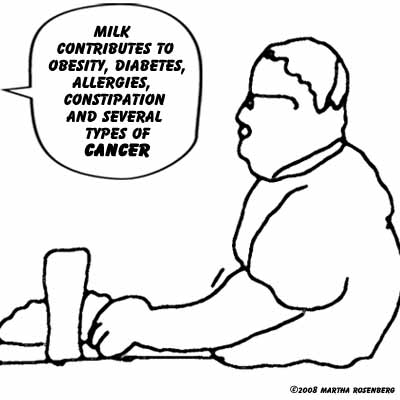
Health professionals continue to denounce milk for its cholesterol and links to heart disease, obesity, high blood pressure, diabetes, and diet-related cancers.
Desperate Advertising
Before the "Got Milk?" ads, dairy marketers conducted a "Milk: It Does a Body Good" campaign which targeted young women with the message that milk would prevent osteoporosis in later life: it failed because teens, tweens, and young women don't much worry about getting osteoporosis when they get old or getting old in general.
Years ago, milk was even marketed-- also unsuccessfully--as a diet food and as a treatment for premenstrual syndrome or PMS. Right.

Despite federal price supports, guaranteed sales through the National School Lunch Program (which also brought us "Pink Slime" some may remember) and huge ad campaigns, there has been so much undrunk and unmarketable milk in the past that farmers have "managed" surplus by simply killing or "culling" cows.
At the heart of the milk campaigns was the claim that bones would snap without milk's calcium. (Similar to the marketing claims of drug giants like Merck, Roche, GSK, P&G, and Sanofi-Aventis that bones would snap without their drugs.)
One milk ad with musician Marc Anthony enticed "Shake it, don't break it. Want strong bones?"
But medical researchers said and continue to say that fractures are not caused by "milk deficiencies" but by lack of exercise, diets that leech calcium, falls and even prescription drugs.
If milk deficiencies caused fractures, why do poorer countries where milk is not consumed often have lower fracture rates than industrialized countries? asked T. Colin Campbell, PhD author of the famous The China Study. (Attempts by big food multinationals to enamor poor countries with dairy appetities have largely failed.)
"There is growing evidence that consumption of a Western diet is a risk factor for osteoporosis through excess acid supply," said an article in the Proceedings of the Nutrition Society, a theory also held by heart expert Dean Ornish, MD who was with the Preventive Medicine Research Institute at the time.
"Elderly women with a high dietary ratio of animal to vegetable protein intake have more rapid femoral neck bone loss and a greater risk of hip fracture than do those with a low ratio," said an article in the American Journal of Clinical Nutrition.
Everything Old Is New Again
Trump's redemption of milk for kids is part of a larger government health revisionism in which hormone replacement therapy (HRT), red meat and lard are somehow now good for you despite their links to cancers, heart attacks and strokes.
It is a disturbing and unscientific reversal. Are mustache ads around the corner? Armour Star and Dinty Moore canned meats? Will thalidomide return?
(Article changed on Jan 19, 2026 at 6:19 PM EST)
(Article changed on Jan 19, 2026 at 6:54 PM EST)