Most Popular Choices
Share on Facebook 5 Printer Friendly Page More Sharing Summarizing
Exclusive to OpEdNews:
OpEdNews Op Eds    H3'ed 8/1/26
  

Reuters, Reza Pahlavi, and the Challenge of Democratic Legitimacy in Iran

By       (Page 1 of 6 pages)   9 comments

Abbas Sadeghian, Ph.D.
Message Abbas Sadeghian, Ph.D.
Become a Fan
  (6 fans)

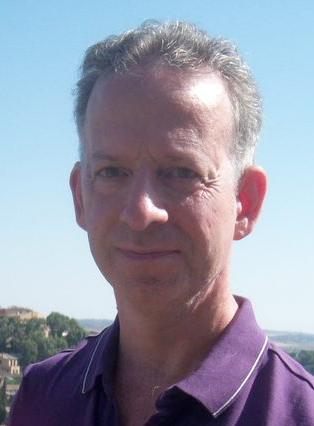
REZA PAHLAVI
REZA PAHLAVI
(Image by Abbas Sadeghian)
  Details   DMCA

Reuters, Reza Pahlavi, and the Challenge of Democratic Legitimacy in Iran

Introduction

Every period of profound political uncertainty produces individuals who emerge as symbols of change. History shows that during national crises, societies often look at familiar names, recognizable personalities, or historical figures who appear capable of leading a transition. Iran is no exception. Nearly half a century after the Islamic Revolution of 1979, Reza Pahlavi, the eldest son of Iran's last monarch, continues to occupy a place in discussions about the country's political future. For many supporters, he represents continuity with a pre-revolutionary Iran remembered for modernization, economic development, and close relations with the West. For others, he embodies a political legacy that ended with one of the twentieth century's largest popular revolutions. Between these competing narratives lies a more fundamental question-- one that was brought into sharp focus by Reuters in its recent reporting: can international visibility and historical symbolism be transformed into democratic political legitimacy?

Reuters' Investigation

Reuters' investigation, published in July 2026 together with an extensive interview with Reza Pahlavi, examined precisely this question. Rather than portraying him simply as either the legitimate leader of the Iranian opposition or as an irrelevant exile, Reuters explored the considerable distance between public recognition and effective political leadership. Drawing upon interviews with current and former associates, political observers, donors, and individuals familiar with his movement, Reuters presented a portrait of an opposition figure whose international profile remains significant but whose efforts to build a unified political organization have encountered persistent difficulties.

The reporting did not deny that Pahlavi enjoys substantial support among many Iranians outside of the country. Instead, it examined whether that support has evolved into the kind of representative political movement capable of leading a democratic transition.

This distinction is crucial because modern democratic politics rests upon institutions rather than personalities. Public attention, media exposure, and international recognition may elevate an individual to global prominence, but durable political authority is ultimately measured by the ability to organize supporters, establish representative institutions, develop coherent policies, resolve internal disagreements, and maintain public confidence over time. Reuters' reporting suggests that these organizational challenges remain among the principal obstacles confronting Pahlavi's movement.

Political Legitimacy and Democratic Leadership

Political legitimacy occupies the center of this discussion. In democratic societies, legitimacy derives from public consent expressed through transparent political processes. Leaders acquire authority because citizens elect them, political parties choose them, representative organizations endorse them, or constitutional procedures confer legitimacy upon them.

Reza Pahlavi has never been elected by the Iranian people, nor has he been selected through any broadly representative body claiming to speak on behalf of Iran's diverse opposition. His political position instead derives largely from his historical association with the Pahlavi dynasty and decades of advocacy from exile.

Supporters argue that this historical legacy provides symbolic continuity with an earlier period of Iranian history and gives him unique credibility among opposition forces. They frequently point to his consistent criticism of the Islamic Republic, his international advocacy for democracy, and his visibility during successive waves of protest inside Iran. To many of his supporters, these qualities justify his emergence as a national figure capable of guiding a democratic transition.

His critics, however, raise a different concern. Democratic leadership, they argue, cannot be inherited. While family history may create public recognition, it cannot substitute for political legitimacy conferred through representative institutions. This criticism does not necessarily reject Reza Pahlavi as an individual; rather, it questions whether hereditary association with a former monarchy can serve as the foundation for democratic leadership in a country whose political future remains undecided.

Reuters deliberately avoided resolving this debate. Instead, its reporting documented the existence of the disagreement itself. Editorial restraint reflects an important principle of responsible journalism. Rather than endorsing one political narrative, Reuters presented competing perspectives while examining the practical realities facing Pahlavi's movement. In doing so, the investigation shifted attention away from personality and toward organization-- a distinction that often determines whether political movements ultimately succeed or fail.

The Historical Legacy of the Pahlavi Monarchy

History provides important context for understanding why this issue remains so sensitive in Iran. The Pahlavi monarchy occupies a uniquely contested place in modern Iranian political memory.

Next Page  1  |  2  |  3  |  4  |  5  |  6

(Note: You can view every article as one long page if you sign up as an Advocate Member, or higher).

Rate It | View Ratings

Abbas Sadeghian, Ph.D. Social Media Pages: Facebook Page       Twitter page url on login Profile not filled in       Linkedin page url on login Profile not filled in       Instagram Page

I was born and raised in Tehran, Iran, and came to the United States in 1976 to study psychology. Over time, America became my home, and I later became a U.S. citizen. My professional career has centered on clinical neuropsychology, particularly (more...)
 
Go To Commenting
The views expressed herein are the sole responsibility of the author and do not necessarily reflect those of this website or its editors.
Writers Guidelines

 
Contact AuthorContact Author Contact EditorContact Editor Author PageView Authors' Articles
Support OpEdNews

OpEdNews depends upon can't survive without your help.

If you value this article and the work of OpEdNews, please either Donate or Purchase a premium membership.

STAY IN THE KNOW
If you've enjoyed this, sign up for our daily or weekly newsletter to get lots of great progressive content.
Daily Weekly     OpEdNews Newsletter

Name
Email
   (Opens new browser window)
 

Most Popular Articles by this Author:     (View All Most Popular Articles by this Author)

Breakthrough treatment for Hemianopia

Neuropsychology of Ayatollah Rohollah Khomeini

Iranian People's Struggle for Freedom, Part VI: The1953 MI6 - CIA, Coup in Iran

Sword and Seizure:Muhammad's Epilepsy and creation of Islam

The History of the Iranian People's Strugle for Freedom: Part III, The Era of The Benevolent Dictator

Why 27 People a Day Die From Air Pollution in Tehran

Comments Image Post Article Comment and Rate This Article

These discussions are not moderated. We rely on users to police themselves, and flag inappropriate comments and behavior. In accordance with our Guidelines and Policies, we reserve the right to remove any post at any time for any reason, and will restrict access of registered users who repeatedly violate our terms.

  • OpEdNews welcomes lively, CIVIL discourse. Personal attacks and/or hate speech are not tolerated and may result in banning.
  • Comments should relate to the content above. Irrelevant, off-topic comments are a distraction, and will be removed.
  • By submitting this comment, you agree to all OpEdNews rules, guidelines and policies.
          

Comment Here:   


You can enter 2000 characters.
Become a Premium Member Would you like to be able to enter longer comments? You can enter 10,000 characters with Leader Membership. Simply sign up for your Premium Membership and you can say much more. Plus you'll be able to do a lot more, too.

Please login or register. Afterwards, your comment will be published.
 

Username
Password
Show Password

Forgot your password? Click here and we will send an email to the address you used when you registered.
First Name
Last Name

I am at least 16 years of age
(make sure username & password are filled in. Note that username must be an email address.)

3 people are discussing this page, with 9 comments  Post Comment


Abbas Sadeghian, Ph.D.

Become a Fan
(Member since Dec 13, 2006), 6 fans, 144 articles, 166 quicklinks, 1063 comments (How many times has this commenter been recommended?)
Facebook Page Twitter page url on login Profile not filled in Linkedin page url on login Profile not filled in Instagram Page

  New Content

One of the central questions surrounding Reza Pahlavi is not simply whether he favors democracy, but whether he can overcome the historical and political baggage associated with the Pahlavi name. For many Iranians, legitimacy is earned through demonstrated public service, political leadership, and accountability. Reza Pahlavi has never held elected office, has never administered a government institution, and has never been tested in executive responsibility. His political experience has consisted primarily of advocacy, public speaking, and opposition activism from exile. While this does not automatically disqualify him from political leadership, it inevitably raises questions among many Iranians about his preparedness to guide a complex democratic transition.

History further complicates his position. The restoration of Mohammad Reza Shah to power in 1953 followed the overthrow of Prime Minister Mohammad Mossadegh in an operation organized by Britain's MI6 and the U.S. CIA, an event that remains one of the defining historical grievances in modern Iranian political consciousness. Whether one views the coup as a Cold War necessity or a violation of Iranian sovereignty, few would dispute that it profoundly shaped public attitudes toward foreign involvement in Iranian politics. That historical memory continues to influence how many Iranians evaluate any contemporary political figure perceived as enjoying significant external backing.

This concern has become particularly relevant because Reza Pahlavi has openly welcomed political and, in recent years, military pressure by Western governments against the Islamic Republic, and has maintained a visible relationship with Israeli officials, including his well-publicized visit to Israel in 2023. During the 2026 conflict involving Israel and Iran, he argued that outside military action could accelerate political change inside Iran. These positions have strengthened his support among some opponents of the Islamic Republic while simultaneously deepening suspicion among others who believe that Iran's future should be determined primarily by Iranians rather than by foreign governments.

Another issue frequently raised by critics concerns political continuity with the former monarchy. Reza Pahlavi has repeatedly spoken positively about aspects of his father's rule and has argued that many of the modernization policies pursued before 1979 should inform Iran's future. Supporters interpret these remarks as an endorsement of institutional competence and national development rather than authoritarian governance. Critics, however, see them as evidence that he has never fully confronted the political shortcomings of the Pahlavi era, including restrictions on political pluralism and the legacy of the SAVAK security apparatus. These differing interpretations continue to divide opinion.

Ultimately, the hesitation expressed by many Iranians is not necessarily rooted in personal hostility toward Reza Pahlavi. Rather, it reflects broader concerns about democratic legitimacy, historical memory, political experience, and foreign influence. In a country where outside intervention has repeatedly shaped domestic politics over the past century, many citizens remain cautious of any leader whose path to power appears closely associated with external support. Whether those concerns are ultimately justified is a matter for the Iranian people to decide through genuinely free and competitive democratic processes.

Submitted on Saturday, Aug 1, 2026 at 11:03:42 PM

Author 0
Add New Comment
  Recommend  (0+)
Flag This
Share Comment More Sharing          
Commenter Blocking?
Indent

Scott Baker

Become a Fan Follow Me on Twitter
(Member since Oct 25, 2008), 77 fans, 392 articles, 1495 quicklinks, 4027 comments, 41 diaries (How many times has this commenter been recommended?)
Facebook Page Twitter Page Linked In Page Instagram Page

Reply to Abbas Sadeghian, Ph.D.:   New Content


Another factor arguing strongly against the possibility of democracy in Iran is Iraq. Seen through the long lens of the last 25 years (excluding pre-9/11), the American project of replacing Saddam Hussein's regime with a more-or-less democracy looks like one of the worst foreign policy catastrophes of the last 250 years of America (i.e. the whole time of America). Not only is the democracy deeply flawed, and Iraq deeply fractured along sectarian lines, but Iraq leadership is committing the greatest sin of all in Islamic countries; no, not being an American vassal, which Iraq isn't, even though the largest diplomatic base in the region might suggest otherwise. There is actually a good amount of opposition to continued American presence in Iraq.

The problem is that opposition is rooted in forces supported by Iran. Iran now treats Iraq as just another state in which to place their proxy forces. Just last week, Iranian linked forces, not Houthies according to the latest reporting, fired and struck two ships docked in Egypt's northern Mediterranean port, alarmingly expanding the scope of the war to putting the highly vulnerable Suez canal - with its complicated and definitely not bomb/missile proof series of locks under potential attack. Additionally, Saudi Arabian oil fields were attacked by Houthie and Iranian backed militias in Iraq, prompting both Saudi Arabia and America to respond with attacks on those groups in a combined air campaign. As with all air campaigns in this war, little is known objectively about how successful they were, of if, in the increasingly common vernacular, they "just blew up dirt." In any case, with the removal of the Hussein regime - the vaunted regime change that is a telling, but highly negative, example of what can happen to Iran too - the regime that replaced Hussein's feared but respected regime is weak.

Weakness is unforgivable in Islamic countries. They are not rooted in democracy, in fact they are inherently undemocratic; authority comes from strength of the monarchy, or a military regime, or a theocratic clerical body with a strong internally repressive force. In the latter respect it's not that different from Savak under the previous Shah of Iran, except that America at least officially doesn't support theocracies.

Monarchies it can support, and even prefers them sometimes to messy democracies where they can have more influence over the men at the top, instead of the uncontrolled masses voting below (with Trump, it's supported by his own regime in America too). Hussein was the greatest check on Iranian power, through long bloody wars that diminished both sides so neither gained hegemony in the Middle East. It was a difficult, violent, but effective stalemate. Without his regime, Iran grew in power to explosive levels, now on the cusp of dominating the entire region. Saudi Arabia may claim more legitimacy as the center - literally, the Mecca - of Islam, but it's vulnerable with its endless flat and easily bombed oil fields, vs. Iran's mountains preventing successful military crippling along the vital Persian Gulf; it is sometimes forgotten that only Iran controls an entire side - the eastern side - of the Gulf, whereas multiple weaker countries can't fully control the western side and part of the northern terminus, even combined with each other, and with America, which is now chased out of its devastated bases. The American regime has tried to block satellite pictures of American base destruction, but Chinese and other pictures have snuck out and are cited in alternative media on the internet (another of several reasons the Trump administration is trying to persecute and perhaps prosecute these outlets, in contravention to U.S. First Amendment freedom of the press rights).

Iran is and remains, the tip of the Islamic spear, and a broadening part of the whole spear shaft too. It's hard to see how regime change like Reza Pahlavi taking over some kind of role, democratic or more likely, dictatorial, can possibly replace the joint IRGC-Theocratic regime that is still developing in Iran. The Iranian regime HAS changed, just not in the way Trump wanted. He wanted a second cooperative Venezuela, instead he got a strengthened Iranian military-theocracy-dictatorship. Even he does not believe Reza Pahlavi has anything close to the level of support needed to replace what exists now.

Submitted on Sunday, Aug 2, 2026 at 1:38:40 AM

Author 0
Add New Comment
  Recommend  (1+)
Flag This
Share Comment More Sharing          
Commenter Blocking?
IndentIndent

Abbas Sadeghian, Ph.D.

Become a Fan
(Member since Dec 13, 2006), 6 fans, 144 articles, 166 quicklinks, 1063 comments (How many times has this commenter been recommended?)
Facebook Page Twitter page url on login Profile not filled in Linkedin page url on login Profile not filled in Instagram Page

Reply to Scott Baker:   New Content

Your comment raises several important points, and there is more common ground between us than may appear at first glance. I agree that the experience of Iraq should serve as a cautionary tale for anyone who believes that military intervention or externally imposed regime change naturally produces liberal democracy. History has repeatedly demonstrated that removing an authoritarian government is far easier than building stable democratic institutions in its place.

Where I respectfully disagree is with some of your broader conclusions. We have debated this before, and I suspect we will continue to disagree because I believe your analysis is often influenced by a strongly Zionist perspective. That is, of course, your right, just as it is mine to interpret events differently. One of the greatest strengths of living in a democratic society is precisely that we can exchange opposing views without becoming enemies.

I would also offer one important historical clarification regarding Iraq. While the public justification for the 2003 invasion eventually evolved into language about democracy and liberation, it is difficult to argue that creating a democratic Iraq was the primary motivation behind the decision to go to war. Numerous historians have pointed to a much more complex combination of factors. These include the post-9/11 political atmosphere, the Bush administration's strategic doctrine of preventive war, concerns-- later shown to be unfounded-- about weapons of mass destruction, regional security calculations, and the influence of various policy groups advocating the removal of Saddam Hussein. The role of Vice President Dick Cheney, his previous association with Halliburton, and the extensive no-bid reconstruction contracts awarded after the invasion have also generated significant scholarly and journalistic debate regarding conflicts of interest and the economic dimensions of the war. Likewise, many analysts have argued that influential pro-Israel policymakers viewed Saddam Hussein as a major regional threat whose removal would improve Israel's strategic environment. Whether one accepts all of these arguments or not, they illustrate that the decision to invade Iraq cannot be reduced simply to an idealistic project of democratization.

I also think it is worth remembering the historical context. In the immediate aftermath of September 11, the United States possessed enormous international sympathy and had broad legitimacy to pursue al-Qaeda in Afghanistan. The subsequent decision to shift strategic attention toward Iraq remains one of the most controversial foreign policy choices in modern American history. Many observers have argued that this diversion weakened the campaign against Osama bin Laden, destabilized Iraq, expanded Iran's regional influence, and produced consequences that continue to shape the Middle East today.

Where I also differ is in the assertion that Muslim-majority societies are somehow inherently incompatible with democracy. History provides a far more nuanced picture. Political outcomes are shaped by institutions, state capacity, economic development, education, historical experience, and external intervention-- not by religion alone. While democratic experiments in the region have often struggled, that does not establish an inherent cultural or religious incapacity for representative government.

Finally, I agree that Reza Pahlavi currently lacks the institutional base inside Iran necessary to assume national leadership, and I have expressed similar reservations myself. But I would be equally cautious about concluding that the present political order is therefore permanent or that Iran's future can be predicted with confidence. Political systems often appear remarkably stable until they suddenly are not.

As always, I appreciate the thoughtful exchange. We may continue to interpret many of these events differently, but respectful disagreement grounded in history and evidence is one of the privileges of a free society.

Submitted on Sunday, Aug 2, 2026 at 7:54:28 AM

Author 0
Add New Comment
  Recommend  (1+)
Flag This
Share Comment More Sharing          
Commenter Blocking?
IndentIndentIndent

Scott Baker

Become a Fan Follow Me on Twitter
(Member since Oct 25, 2008), 77 fans, 392 articles, 1495 quicklinks, 4027 comments, 41 diaries (How many times has this commenter been recommended?)
Facebook Page Twitter Page Linked In Page Instagram Page

Reply to Abbas Sadeghian, Ph.D.:   New Content

Yes, I agree with all of your points about the false justifications for the 9/11 Iraq war, the second of the soon-to-be-called "endless wars" that Trump repeatedly promised not to get us into. Trump is correct to say this current war is not technically there yet, but he is certainly wrong to keep claiming ridiculously that he's ended the wars over and over (I think part of that is to give a flimsy justification to avoiding having Congress squash the war with legislation. The Republican majority's spineless abdication of its war-determining Constitutional powers is a subject for another time, but it's worth noting that this abdication is exactly what the Founders feared in granting too much power to the president, and they were right in that it easily produces wars. Maybe Congress will use its remaining power of the purse to rein Trump in, especially with his declining popularity ratings and especially from the Republican colleagues he didn't endorse and who lost their recent primaries. But I wouldn't count on that).

Wars begun on false premises have bad conclusions, unsurprisingly. This one will be no different. At different points, but repeatedly, Trump has promised Iranian citizens he "has their back" and that he is clearing the way for them to take over from a toppled regime. At other times, he has promised to "blow the f___ s___ out of Iran," meaning blowing up bridges and power plants, which would clearly be war crimes (under the new "policy" of Trump and arguably the worst DoD secretary in history, Pete Hegseth, war crimes don't matter and America is weak to pay attention to civilian deaths). But even if Trump wants to return to the days of piracy and plunder, as exemplified by his new self-selected model of "victory" in Venezuela (which really just awaits the next Hugo Chavez or Fidel Castro type South American revolutionary, which by then, America won't have the appetite or arms to suppress), the reality of munitions shortages, lack of American industrial capacity - thanks to offshoring everything over decades - won't let him try. Reality always prevails in the end. On the Islam question, I also agree that regimes are shaped by all kinds of non-religious factors. And in the case of Iraq, Saddam's Bathist party is widely considered to have been secular, not Islamic. Of course, there are dictatorships and non-democracies everywhere, and the world in general, including the U.S. has been sliding in that direction for 2 decades, according to Freedom House and others. But the difference is that:

A. Islam is not just another religion. It's a method of governance, religiously-based, that unlike the other major monotheistic faiths, has not undergone Reformation leading to a religion-state split. Indeed, it's hard to see how that could happen based on Quranic instructions and how its greatest adherents claim duty to commit Jihad to advance their system of rule by any means necessary (they actually chant this in recent protests). Well, you are right that we have had this discussion previously so I won't rehash it here.

B. There is no Islamic-based country that has democracy as its primary method of choosing leadership or what rules to follow. In Iran that means the people are "free" to elect a president from a carefully selected pool of candidates the ruling Mullahs will allow, but that president is more like a "manager" than a leader, able to make day-to-day decisions about the economy and civil matters, but even there subject to overrule by the supreme council of clerics who follow Islam (at least in their interpretation of Islam, but what other one allows Democracy? None). It sounds a bit like Russia today in that respect, with Putin, for now, in the deciding position as to which candidates will be allowed to challenge him. The difference is that other dictatorships and non-democracies CAN exist, but under Islam, they ALWAYS do.

Of course, I also agree that respectful yet diverse differences of opinions are characteristic of democracies, and I appreciated we can have these discussions on the OEN forum, though I fear what Trump is doing may make even that impossible in the future. Trump is almost entirely transactional. He has no red lines in terms of Islam or anything else. He has no commitment to any deal, even his own. This also explains why a negotiated settlement to the current war is all-but-impossible. The Iranian leadership knows this full well and won't even negotiate with him anymore. So, the strait remains mostly closed, though offloading oil to small ships and pipelines remain partial workarounds, gradually being closed off with cooperation from the Houthis and proxies of Iran (these vary in degree of coordination, but not in basic goals against the West, which at this point, is unlikely to favor America either. We have no allies anymore either, thanks to Trump).

Submitted on Sunday, Aug 2, 2026 at 9:29:09 AM

Author 0
Add New Comment
  Recommend  (1+)
Flag This
Share Comment More Sharing          
Commenter Blocking?
IndentIndentIndentIndent

Abbas Sadeghian, Ph.D.

Become a Fan
(Member since Dec 13, 2006), 6 fans, 144 articles, 166 quicklinks, 1063 comments (How many times has this commenter been recommended?)
Facebook Page Twitter page url on login Profile not filled in Linkedin page url on login Profile not filled in Instagram Page

Reply to Scott Baker:   New Content

Thank you for your thoughtful reply. I appreciate that we agree on many of the important issues surrounding the Iraq War, the dangers of wars launched on false premises, the constitutional role of Congress, and the increasingly transactional nature of President Trump's foreign policy. I also appreciate your acknowledgment that authoritarian regimes are shaped by many factors beyond religion alone. I think that is an important point.

On the question of Islam and democracy, however, I believe we have reached the same place we have in previous discussions. We have explored this issue before, we continue to disagree, and I do not think either of us is likely to persuade the other. That is one of the strengths of a democratic society-- we can disagree respectfully while continuing an honest exchange of ideas.

My own view is that history suggests religion by itself is not a reliable predictor of whether a society becomes democratic or authoritarian. Political institutions, historical experience, colonial legacies, economic development, military influence, education, and geopolitical pressures all play major roles. Religion is one variable among many, but rarely the decisive one.

As an illustration, there are modern states that define themselves in significant part through religion, yet they have developed very different political systems. Iran is governed through a system of religious authoritarianism centered on the doctrine of velayat-e faqih. Armenia, whose national identity has long been closely associated with the Armenian Apostolic Church, has developed a competitive political system despite many challenges. Israel defines itself as the nation-state of the Jewish people and has a vibrant electoral democracy for its citizens, while at the same time facing sustained criticism from organizations such as Amnesty International, Human Rights Watch, and others over policies toward Palestinians that those organizations characterize as constituting apartheid-- a characterization that Israel strongly rejects. Whether one agrees with those assessments or not, these examples illustrate that the relationship between religion and political systems is far more complex than a simple rule.

History also reminds us that Christianity itself did not naturally produce democracy. For centuries, Christian Europe was dominated by powerful monarchies and authoritarian political systems. The Spanish Inquisition, the doctrine of the divine right of kings in France, Tsarist Russia's close alliance between the Orthodox Church and the monarchy, and numerous absolutist governments all existed within deeply Christian societies. Europe's eventual transition toward constitutional government resulted from centuries of political struggle, the Renaissance, the Enlightenment, the Reformation, the growth of representative institutions, and expanding civil society-- not from religion alone.

Likewise, the contemporary Muslim world presents a more diverse picture than is sometimes acknowledged. Indonesia, the world's largest Muslim-majority country, has maintained competitive democratic elections since the fall of Suharto. Malaysia has experienced peaceful transfers of power through elections. Senegal has long been regarded as one of Africa's more stable democracies. Albania, Kosovo, and Bosnia and Herzegovina also demonstrate that Muslim-majority or substantially Muslim societies can develop democratic institutions under different historical circumstances. None of these democracies is perfect-- nor are democracies elsewhere-- but they challenge the proposition that Islam inevitably produces dictatorship.

For that reason, I remain unconvinced that Islam, considered as a religion, is uniquely incompatible with democracy. I believe political outcomes are better explained by the interaction of institutions, history, leadership, socioeconomic conditions, and external influences than by religion alone.

In any event, I think we have probably taken this particular discussion as far as it can go. Rather than repeating arguments we have both made before, I am going to return to a major project that has occupied much of my time recently: a historical documentary on Adolf Hitler, the Second World War, and the long history of European Christian antisemitism. It has been an intellectually demanding project, and I need to devote my attention to it.

As always, thank you for the thoughtful exchange. Although we continue to disagree on this particular issue, I value the opportunity to discuss these important questions in a respectful and democratic forum.

Submitted on Sunday, Aug 2, 2026 at 9:52:19 AM

Author 0
Add New Comment
  Recommend  (1+)
Flag This
Share Comment More Sharing          
Commenter Blocking?

Michael Chavers

Become a Fan
(Member since Oct 19, 2006), 1 fan, 51 articles, 32 comments (How many times has this commenter been recommended?)
Facebook Page Twitter page url on login Profile not filled in Linkedin page url on login Profile not filled in Instagram Page

  New Content

I keep coming back to one simple hope: that the Iranian people will eventually claim the political freedom they've been denied for decades. And if the past few years tell us anything, it's that the majority of Iranians do want a future beyond the theocracy that rules them now.

But here's the brutal reality: the ruling minority controls the guns, the prisons, and the machinery of violence. They've shown-- again and again-- that they're willing to kill tens of thousands of their own citizens to stay in power. That's the wall every democratic movement in Iran keeps crashing into.

And then there's the role of the United States. I don't support the approach Donald Trump has taken toward Iran; it has poured gasoline on an already burning situation. The strategy under President Obama wasn't perfect, but it was coherent-- and it created space for potential democratic reforms. Once Trump tore that framework apart, the situation didn't just worsen; it became dramatically more volatile.

Iran deserves a future shaped by its people, not by a regime clinging to power through force and not by foreign policy blunders that make their struggle harder.

Submitted on Sunday, Aug 2, 2026 at 2:11:20 PM

Author 0
Add New Comment
  Recommend  (2+)
Flag This
Share Comment More Sharing          
Commenter Blocking?
Indent

Scott Baker

Become a Fan Follow Me on Twitter
(Member since Oct 25, 2008), 77 fans, 392 articles, 1495 quicklinks, 4027 comments, 41 diaries (How many times has this commenter been recommended?)
Facebook Page Twitter Page Linked In Page Instagram Page

Reply to Michael Chavers:   New Content


Yes, I completely agree. And this is why Trump bombing citizens and their infrastructure won't make the slightest difference to the IRGC or the ruling Ayatollahs. They already murder their own citizens by the 10s of 1,000s for simply peacefully protesting. Why should they care if Americans do it as well? OTOH, it does galvanize the ordinary citizen to hate the West even more than their own government and to support the latter at least until the former is eliminated from their perpetually terrible lives. And yes, Obama's carefully crafted - over 18 months - JCPOA nuclear deal was as good as it could be at the time. Iran was already under sanctions for its proxy support. The world was even moving away from absolute support of Palestinians, which is why Hamas decided to attack Israel before even more countries signed the Abraham Accords. Credit where it's due to Trump from his first term. But Israel couldn't finish the job and defeat Hamas or Hezbollah, and now there are other proxies to fight too.

I had my own 7-point plan to have Israel defeat Hamas, which I posted and sent to whomever I thought had influence to make it happen. It could not have come out any worse than this stalemate war of attrition. The IDF is exhausted and the Haredi won't even let their young men fight for their country nor do they want to, which is stirring up all kinds of anger and dissent in Israel too. Maybe if Netanyahu gets defeated Israel will stop subsidizing Haredi who do nothing for Israel except have more babies that do nothing either when they grow up.

The current situation is unsustainable, and Iran knows this, as do its proxies. They are playing the long game.

A 2-year old plan for Israel to defeat Hamas. Only #2 has been done.
(Image by Scott Baker)
Details DMCA

Gaza is by far the poorest microstate out of 14, including Manhattan, 6X smaller than Gaza
(Image by Scott Baker)
Details DMCA

Submitted on Sunday, Aug 2, 2026 at 2:37:19 PM

Author 0
Add New Comment
  Recommend  (0+)
Flag This
Share Comment More Sharing          
Commenter Blocking?
Indent

Abbas Sadeghian, Ph.D.

Become a Fan
(Member since Dec 13, 2006), 6 fans, 144 articles, 166 quicklinks, 1063 comments (How many times has this commenter been recommended?)
Facebook Page Twitter page url on login Profile not filled in Linkedin page url on login Profile not filled in Instagram Page

Reply to Michael Chavers:   New Content

I largely agree with your assessment. The central challenge facing Iran's democratic movement is not simply the level of public dissatisfaction, but the profound imbalance between society and the state's coercive institutions. Over the past two decades, repeated waves of protest-- from the Green Movement in 2009, to the nationwide demonstrations of 2017-2018 and 2019, and the "Woman, Life, Freedom" movement following the death of Mahsa Amini in 2022-- have demonstrated that significant segments of Iranian society seek greater political freedom, accountability, and respect for civil liberties. Yet these movements have also shown the extraordinary capacity of the state to preserve itself through the combined power of the Islamic Revolutionary Guard Corps (IRGC), the Basij, the intelligence services, and the judiciary.

I also share your view that the JCPOA should be evaluated within its proper historical context. It was never intended to democratize Iran, nor did its supporters claim that it would. Its principal objective was to prevent nuclear proliferation, reduce the likelihood of military confrontation, and establish a rigorous international verification system under the International Atomic Energy Agency (IAEA). By those measures, the agreement achieved important results. The IAEA repeatedly reported that Iran was implementing its nuclear-related commitments during the period before the United States withdrew from the agreement.

Whether the JCPOA would ultimately have encouraged gradual political liberalization inside Iran is a question that historians and political scientists continue to debate. Some argue that greater diplomatic engagement and economic normalization could have strengthened Iran's middle class and pragmatic political actors. Others contend that sanctions relief also benefited institutions closely associated with the state, including elements of the IRGC, without producing meaningful political reform. Both perspectives deserve careful consideration, and the available evidence does not support simple conclusions.

One point that is often overlooked is that the JCPOA itself was politically controversial within Iran. Hard-line factions and many figures associated with the IRGC expressed deep skepticism about the agreement, arguing that the United States could not be trusted and that expanded engagement with the West posed strategic and ideological risks. The subsequent U.S. withdrawal from the agreement in 2018 strengthened those arguments in the eyes of many Iranian conservatives, making future diplomacy considerably more difficult.

Ultimately, I believe that durable political change in Iran cannot be imposed from abroad. Neither military intervention nor economic coercion alone can build democratic institutions. Sustainable democracy requires domestic legitimacy, accountable institutions, an independent judiciary, protection of civil liberties, and the consent of the governed. Those objectives are most likely to be achieved by the Iranian people themselves, not by authoritarian repression at home or by externally imposed political engineering.

Selected References

" International Atomic Energy Agency (IAEA). Verification and Monitoring in the Islamic Republic of Iran in Light of United Nations Security Council Resolution 2231 (2015).
" United Nations Security Council Resolution 2231 (2015).
" Ray Takeyh, Hidden Iran: Paradox and Power in the Islamic Republic.
" Suzanne Maloney, Iran's Political Economy Since the Revolution.
" Karim Sadjadpour, Carnegie Endowment for International Peace, analyses on Iranian domestic politics and the JCPOA.
" Human Rights Watch. World Reports (Iran chapters, various years).
" Amnesty International. Reports on the 2019 protests and the 2022 "Woman, Life, Freedom" protests.

Submitted on Sunday, Aug 2, 2026 at 3:05:43 PM

Author 0
Add New Comment
  Recommend  (0+)
Flag This
Share Comment More Sharing          
Commenter Blocking?

Abbas Sadeghian, Ph.D.

Become a Fan
(Member since Dec 13, 2006), 6 fans, 144 articles, 166 quicklinks, 1063 comments (How many times has this commenter been recommended?)
Facebook Page Twitter page url on login Profile not filled in Linkedin page url on login Profile not filled in Instagram Page

  New Content
When Expectations Collide with Political Reality

An interesting article recently published on MSN, based on reporting by Reuters, examines the current political standing of Reza Pahlavi and the broader challenges facing the Iranian opposition. Drawing on interviews with supporters, donors, analysts, and individuals familiar with the opposition movement, the article presents a picture of growing skepticism about the ability of exile politics to produce meaningful political change inside Iran.

The article describes growing disappointment among segments of Pahlavi's supporters and financial backers following expectations that the recent conflict would create an opportunity for a political transition. It notes concerns about organizational shortcomings, the absence of a unified opposition, and the lack of a strong political infrastructure capable of converting public dissatisfaction into an effective alternative government. It also highlights the continuing fragmentation of the opposition and the difficulty of building consensus among monarchists, republicans, liberals, ethnic organizations, and other anti-government groups.

One of the article's central themes is that international visibility alone cannot create political legitimacy. It argues that lasting political change requires organization, credibility, domestic support, functioning institutions, and a realistic transition strategy. Without those elements, even a well-known opposition figure may struggle to transform international attention into effective political leadership.

The article also suggests that many of the assumptions surrounding a rapid post-war political transition proved overly optimistic. As events unfolded, expectations of an imminent collapse of the Islamic Republic were not matched by developments on the ground. This, according to the report, has led many supporters to reassess both the prospects of exile-based leadership and the broader strategy for political change.

Whether one agrees with all of the article's conclusions or not, it raises an important issue worthy of discussion: meaningful political transformation in Iran is likely to depend far more on developments within Iranian society than on international recognition or military pressure. In that respect, the article contributes to a broader conversation about the limits of exile politics and the complexity of democratic transition in deeply entrenched authoritarian systems.

Submitted on Tuesday, Aug 4, 2026 at 9:13:47 AM

Author 0
Add New Comment
  Recommend  (0+)
Flag This
Share Comment More Sharing          
Commenter Blocking?

 
Want to post your own comment on this Article? Post Comment


Tell A Friend