


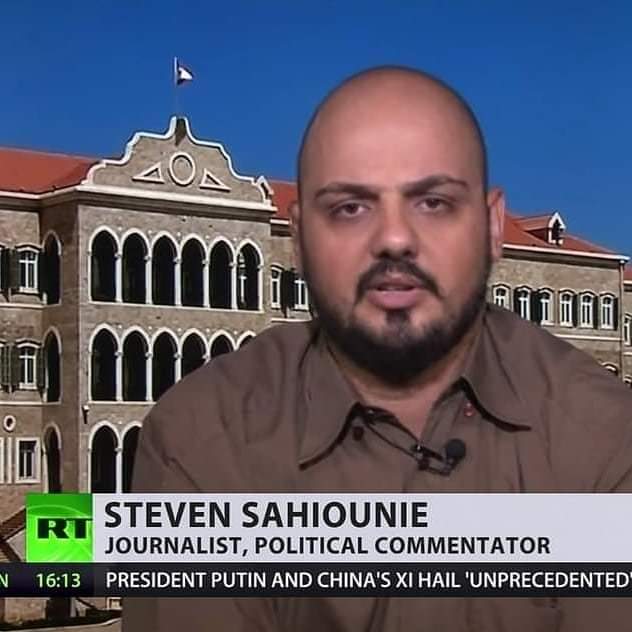


Steven Sahiounie, journalist and political commentator
Ireland is pressing the European Union (EU) to adopt a more unified and forceful response to Israel's policies in the occupied Palestinian territories, calling for expanded sanctions on Israel, restrictions on settlement goods and services, and a reassessment of Israel's privileged economic relationship with the bloc.
The effort comes as European governments remain sharply divided over whether to suspend the EU-Israel Association Agreement. Ireland, Spain and Slovenia have pushed for suspension, but the initiative has so far failed to secure sufficient support. EU foreign policy chief Kaja Kallas said in April that there was not enough backing among member states for suspension, while Germany and Italy maintained their opposition.
Irish Minister of State for International Development Neale Richmond has argued that Europe must move beyond expressions of concern and develop a coordinated response to Israel's settlement expansion, annexationist policies and violence against Palestinians.
Richmond said Ireland is working with countries including Spain and the Netherlands to generate greater economic pressure on Israel. He has argued that European action should extend beyond settlement goods to broader sanctions and a reduction of some of the trade privileges Israel enjoys in its relationship with the EU.
The EU is Israel's largest trading partner. The economic relationship gives the bloc considerable leverage, even as member states remain divided over whether and how to use it.
Europeans are questioning if the EU represents them, or if the bloc is simply an extension of Washington, DC. The EU claims to support international law, human rights and a two-state solution, while continuing economic, political and military relationships with Israel, mirroring the policy of US President Donald Trump.
Against this backdrop, journalist Steven Sahiounie interviewed Dr. Ramzy Baroud, a Palestinian author, historian and academic, about the divisions within Europe, the limits of the EU's current policy and what measures could produce meaningful pressure on Israel.
#1. Steven Sahiounie (SS): Ireland has been among the strongest European voices calling for measures against Israel, while other EU member states remain reluctant to support sanctions or suspend the EU-Israel Association Agreement. How long can the European Union continue to address the Palestinian issue without a unified position?
Dr. Ramzy Baroud (RB): The issue is not merely the reluctance of certain EU member states. The European Union is divided into three broad camps: those that criticize Israel and have taken some action against it, such as Ireland, Spain and Belgium; those that remain firmly supportive of Israel, including Germany, Austria, the Czech Republic and Hungary; and those that remain largely undecided but generally lean toward supporting Israel.
The EU's problem, therefore, is not simply a political division driven by reluctance. It is also a profound moral and ideological division.
Unfortunately, the pro-Palestine camp within the EU remains a minority. Moreover, the collective nature of European foreign policy makes it extremely difficult for these countries to overcome opposition from the pro-Israel camp and establish any meaningful consensus.
As a result, the impasse continues, and as long as it does, the EU's fundamental policy toward Israel is unlikely to change. According to the latest figures from Germany's Economy and Energy Ministry, for example, Germany approved nearly $930 million worth of military equipment exports to Israel during the first six months of 2026.
The overall volume of trade between Israel and the EU has, in fact, increased since the beginning of the genocide, rising from approximately $30 billion to $32 billion.
In other words, despite expressions of concern, occasional threats and limited sanctions imposed by individual countries, business between Europe and Israel continues largely as usual.
#2. SS: The European Union continues to reaffirm its commitment to international law and the two-state solution, while settlement expansion and violence against Palestinians continue. Has the EU now reached a critical test of its credibility on the international stage? What concrete action would demonstrate that these principles are more than political rhetoric?
(Note: You can view every article as one long page if you sign up as an Advocate Member, or higher).






 Post Article Comment and Rate This Article

