


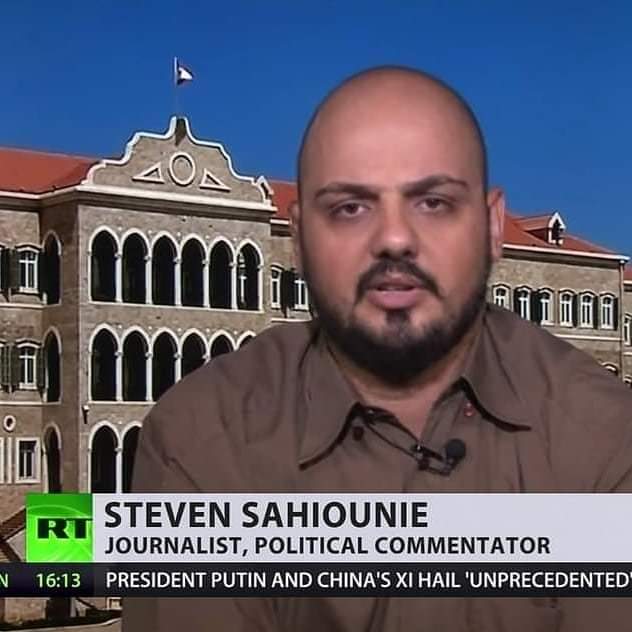


Steven Sahiounie, journalist and political commentator
The confrontation between the United States and Iran is entering a dangerous new phase, with reciprocal strikes, attacks involving missiles and drones, civilian casualties in southern Iran, and growing tensions around the Strait of Hormuz raising concerns that the conflict could expand beyond the immediate U.S.-Iran theater.
The Iranian Red Crescent released images showing the extent of the destruction at a building where a wedding celebration was reportedly taking place. The footage also documented wounded people, including children, receiving treatment in hospital.
U.S. aircraft had bombed a house in the village of Kohestak, in the Sirik district of southern Iran, where a wedding celebration was being held. According to Press TV, the attack killed five people, including a child, and wounded approximately 63 others.
The escalation has not been confined to Iran. Tehran has carried out missile and drone attacks against U.S. bases and interests in Jordan, Iraq and Bahrain. Kuwait has also announced that it was targeted in Iranian attacks.
At the same time, the security situation around the Strait of Hormuz has become increasingly tense.
The Iranian Revolutionary Guard said that two tankers had attempted, "at the instigation of the U.S. military," to travel outside the maritime route designated by Iranian forces in the strait before striking mines and suffering explosions on board, causing fires.
Iran then announced what it described as a "decisive operation" targeting "U.S. bases and interests in the region," according to the Tasnim News Agency.
Iranian President Masoud Pezeshkian said Tuesday, during the Shanghai Cooperation Organization summit in Bishkek, that Iran would respond immediately if the United States returned to its commitments under the temporary agreement signed on June 17.
Iranian Foreign Minister Abbas Araghchi had said Monday that a U.S. return to its obligations under the memorandum of understanding "would allow matters to return to the right track and bring the current situation to an end."
"We will hit them hard. There will be a response," Trump told Fox News.
Trump described Iran as a "failed state," claiming that most Iranian leaders had been killed and that Iran's naval and air forces and surveillance equipment had been largely destroyed.
Despite the strong words from Trump, Iran continues to use deadly military force effectively against the U.S. and its allies.
Journalist Steven Sahiounie conducted an exclusive interview with Algerian journalist, and security and strategic affairs researcher, Mustafa Kamal Damani.
1. Steven Sahiounie (SS): From your point of view, who holds the key to stopping the escalation today: Washington or Tehran? And what immediate step should either side take to prevent the current confrontation from turning into a full-scale war that would be difficult to contain?
Mustafa Kamal Damani (MKD): The prevailing feature of the current conflict appears to be a state of neither peace nor war, even as the intensity of the military confrontation escalates.
(Note: You can view every article as one long page if you sign up as an Advocate Member, or higher).






 Post Article Comment and Rate This Article

