




On February 1, Israel attacked Lebanon with chemical weapons. The Agriculture and Environment Ministries announced the toxic chemical was very high concentration of glyphosate.
"The concentration in some samples ranges between twenty and thirty times the normally accepted levels," they specified in a statement.
President Joseph Aoun condemned the attack by Israeli planes, calling it "a flagrant violation of Lebanese sovereignty, as well as an environmental and health crime against the Lebanese people and their land."
Videos of the planes delivering the chemical attack appeared on TV and social media, while residents witnessed the attacks and alerted authorities. Areas hit were Aita al-Shaab, Ramieh and Marwanieh, also known as Bint Jbeil.
Environment Minister Tamara Elzein requested that the Lebanese Army collect samples for analysis, and described this spraying as "a flagrant violation of national sovereignty, under the eyes of the international community," and as an "extremely dangerous hostile act that threatens food security, exposes natural resources to serious damage, and harms the livelihoods of farmers."
The Lebanese government sent a complaint to the UN, and human rights groups and various NGOs associated with health and environmental issues have condemned the chemical attack.
One resident asked, "When the Assad regime used chemicals on people in Douma, Trump responded with a military strike. Will Trump strike Israel?"
The US holds all countries to account, except in the case of Israel, which violates all international laws and norms with complete impunity.
On Nov 26, 2025, the Jerusalem Post reported that Qatar and Ireland had demanded that the Organization for the Prohibition of Chemical Weapons (OPCW) investigate Israel's use of chemical weapons in Gaza.
Glyphosate poses risks such as skin/eye irritation, nausea, and potential long-term health effects including cancer and neurotoxicity.
The International Agency for Research on Cancer (IARC) classifies glyphosate as a Group 2A "probable" human carcinogen, with associations to Non-Hodgkin Lymphoma, with studies suggesting potential links to kidney disease, liver inflammation, and developmental/reproductive issues.
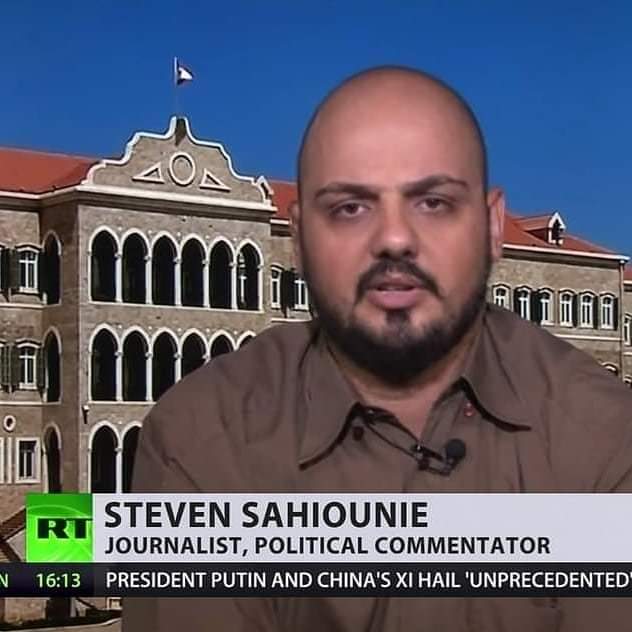
Journalist Steven Sahiounie interviewed Zeina Arzouni, journalist, political analyst, and program producer for her view on what is happening in Lebanon.
#1. Steven Sahiounie (SS): Reports on the ground, and videos on TV and social media show the Israeli aircraft spraying chemical weapons on the south of Lebanon. Similar reports are from Syria as well. Is this a "Scorched Earth" policy coming from the Israeli Netanyahu government?
Zeina Arzouni (ZA): A particularly alarming recent development is the spraying of toxic chemicals on crops and olive trees in frontline villages. Israel justifies this by stating the goal is to eliminate dense vegetation that could provide cover for militants near the border. This "scorched earth" tactic effectively destroys the livelihoods of local farmers.
The Lebanese government's lack of a serious official response is attributed to a desire not to offend the United States. Furthermore, there is a deep internal divide regarding the concept of sovereignty and the role of the "Resistance." Some political factions believe Hezbollah's arsenal is no longer useful and are willing to leave the party's "back exposed" to facilitate a future peace treaty after the forced disarmament by Israel.
#2. What is the current status of the Israel-Lebanon ceasefire?
Next Page 1 | 2 | 3 | 4 | 5 | 6 | 7 | 8 | 9
(Note: You can view every article as one long page if you sign up as an Advocate Member, or higher).






 Post Article Comment and Rate This Article

