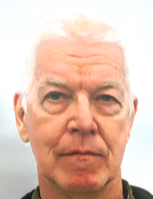

My grandmother used to say that the best things come in small packages. After receiving this book as a gift, I would say that Caught in the Crosshairs of War is a perfect example of that. It is the true story of an American family's harrowing experience while touring Europe, packaged in a very short, very good book. The read was so riveting that I could not put it down.
It was the summer of 1968 when Gale Nemec and her family embarked on their tour. They traveled in a small bus to accommodate their family of nine, including two parents, a son, and six daughters. Gale was a teenager then, anticipating high adventure. Their itinerary included Czechoslovakia, the home of their Nemec ancestors. As a member of the Soviet bloc, the country was constrained by Moscow's powerful reach, but the Czech leader, Alexander Dub?ek, had recently introduced "Socialism with a Human Face" in his effort to make public life more democratic and humane.
Their first day in Prague was exciting and fun. Wenceslas Square, where the Nemecs found lodging, was filled with people celebrating these reforms, which came to be known as Prague Spring. But the following morning, Gale was awakened by gunfire in the streets and the sight of her father grimly staring out the window at transport planes in the sky. He had been a commander in the US Navy, and he realized that the country was being invaded by the Soviet-led Warsaw Pact.
Reading Nemec's book in 2026, I found that its power lies not only in the family's narrow escape; but also in the way it forces an American reader to measure past convictions about freedom, patriotism, and faith against the turbulent civic life of the present. So reader be advised: this is not a typical book review; it is a response to a memoir that becomes, almost inevitably, a reflection on what Americans once believed their country represented and what they now fear that it might be becoming.
For me, one of the book's most engaging features is the author's willingness to describe her changing feelings and states of mind throughout the narrative, beginning with her upbringing in Florida by deeply religious and patriotic parents. Her story took me back to my own upbringing in Virginia during World War II. We were also patriotic. My father volunteered for the Army and my uncle volunteered for the Marine Corps. He became a bomber pilot in the Pacific theater where his plane was shot down twice, once over Guadalcanal, where he was rescued, and once over Guam, where he was missing in action. My mother took in his wife and baby until Japan fell and he was rescued by American soldiers and brought home. She also took in a Jewish woman who sought asylum in the US after escaping from France, which had been conquered by Nazi Germany..
Because the author consistently shared her internal as well as external experience, I was enthralled from the beginning, and I wept when the family, after hours of fear and anguish, finally succeeded in escaping across the border. I shared their gratitude to God and the Founding Fathers for the freedoms Americans enjoyed in those days. Yet after vicariously experiencing that earlier America through the Nemec family's ordeal, it was difficult to return to the America of 2026.
Sadly, the country that so many have suffered and given their lives to defend now seems to have lost its way. Since the 1980s, the United States has time and again initiated unwise and unwarranted military conflicts, often without either public approval or the authorization by Congress that the Constitution requires. Economic inequality has also widened sharply: CBS News reported in January 2026 that the wealthiest 1% of U.S. households held about $55 trillion in assets in the third quarter of 2025, roughly equal to the wealth held by the bottom 90% combined. Against this dismal backdrop of war, inequality, homelessness, hunger, declining trust in government institutions, and inescapable government surveillance, many Americans understandably wonder if their country still qualifies as a democracy, and many dread to think about what the future might hold for their children.
How did this state-of-affairs come about? Was President Eisenhower's warning about the military-industrial complex prophetic, or was Ernest Mandel's economic analysis of late-stage capitalism closer to the mark? The two are not mutually exclusive, and both speak to the danger of systems that concentrate power and wealth while weakening moral and legal accountability.
Charles Eisenstein, an American writer, offers grounds for hope in his Substack article, "The Age of Peace Is Very Close." He argues that a new awareness of worldwide interdependence is emerging as people recognize that the atomized, individualized, and competitive way of perceiving others and acting in the world is unsustainable. His "Mirror Principle" holds that what we do to others we also do to ourselves, a claim he applies to war, ecology, economics, and the moral life of communities.
Eisenstein also observes that climate change, environmental degradation, and continuous war have given rise to a growing appreciation of Indigenous worldviews that consider all life as sacred and entail a moral obligation to nurture and protect the physical environment as well as the life it sustains. His hope rests on the conviction that the emerging recognition of the interdependence of all living things may help lead humanity toward a more peaceful world order.
Va'clav Havel was the playwright and dissident who lead the non-violent transition that liberated Czechoslovakia from Soviet totalitarianism. They called it the Velvet Revolution. After being elected president by acclamation, he established a parliamentary republic in 1989. Havel offers a sterner and perhaps deeper understanding of hope that is not based on optimistic predictions that events will turn out well. It is rather "a deep and powerful dimension of the human spirit" that comes "from elsewhere" and enables people to work for what is good because it is good, regardless of how it turns out, "even in conditions that seem as hopeless as ours do now." (Disturbing the Peace, Vintage Books, New York 1991)
This is why Nemec's story matters now. It reminds readers that freedom is not an abstraction but a lived condition, experienced through families, memory, captivity, fear, courage, asylum, and hope. It also reminds us that hope must be more than optimism; it must be a discipline of conscience. Caught in the Crosshairs of War invites readers to ask what freedom requires of memory, gratitude, courage, faith, hope, love for others, and moral action in their own time. 1
1
 1
1
 1
1






 Post Article Comment and Rate This Article