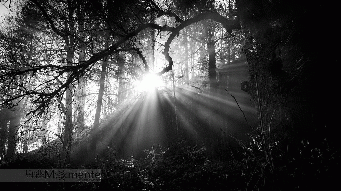
The year is drawing to a close, and with it comes the longest night of the year. It is a simple fact of nature, yet one deeply woven into human history-- marked as the Solstice by some, celebrated as Christmas by others, and observed in varied ways across religions and philosophies.
Across cultures, this moment has carried a shared meaning: the return of light, the renewal of hope, and the affirmation that life endures even after its darkest hours.
Humanity has survived long nights before-- times of despair, violence, and apparent collapse. Again and again, people have held fast to the belief that resilience exists, that life returns, and that the human spirit can rise from what once seemed like near-death. This is not naïve optimism; it is a lesson written into both nature and history.
The coming of the light marks a time when the human spirit can emerge from the shadows-- renewed, resolute, and willing to confront what once felt overwhelming. It is a reminder that restoration is possible: of life, of nature, and of our shared humanity.
And yet, we find ourselves today in an especially dark season.
It is marked by violence, force, and intimidation; by war and the ever-present threat of wider war; by a sustained assault on democratic values as the United States approaches its 250th anniversary; and by a chilling tolerance for atrocities that should never be normalized-- including genocide carried out before the eyes of the world.
No authentic faith can justify such destruction. No moral tradition worthy of the name sanctifies cruelty, domination, or the stripping away of human dignity-- unless one returns to the old gods, bloody and unrestrained, indifferent to suffering.
This nation, largely Christian in heritage, celebrates Christmas as the birth of a redeemer who taught love, courage, humility, and compassion. The story at the heart of that tradition calls us not to conquest or exclusion, but to care for one another; to recognize our shared humanity; and to understand ourselves as part of a sacred web of life that sustains us all.
The season does not ask for passive reflection. It asks something harder-- and more necessary. It asks us to choose light over darkness, conscience over convenience, and responsibility over indifference.
To honor the season is to honor the coming of the light-- not only in ritual, but in action. It is to illuminate the human spirit so it may guide us out of this valley of shadows and toward a future that is humane, sustainable, and worthy of those who will inherit it.
The light is returning. What remains is whether we will rise to meet it.
Bob Passi is the author of Saving Democracy: From the Warnings of 2016 to the Urgency of 2025and writes on democracy, human dignity, and the moral responsibilities of citizenship.